
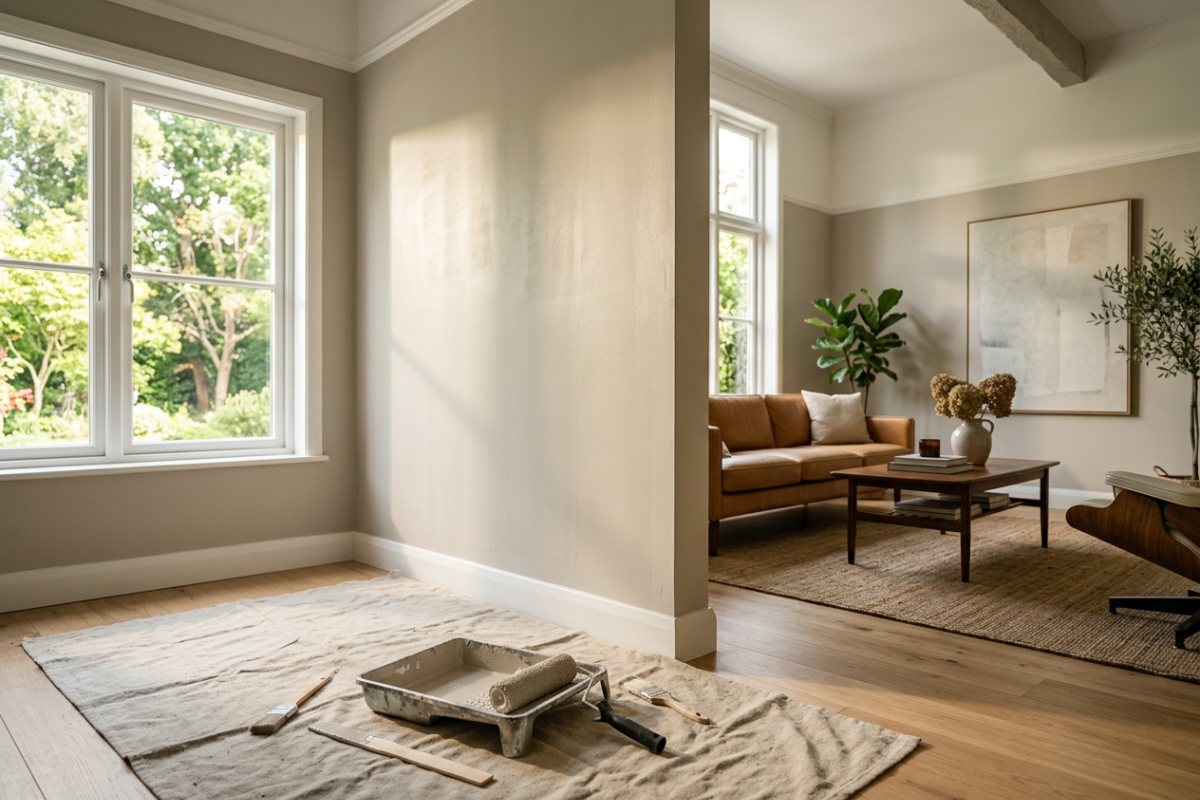
It’s easy to spend too much time on the color and not enough on the finish. The color decision is fun. But the finish determines how the wall holds up to hands, steam, and scrubbing five years from now.
Finishes are on a spectrum: flat and matte on one end, then eggshell, satin, semi-gloss, and high-gloss on the other. Each step up trades a little forgiveness for a little toughness.
Below we go room by room, weighing traffic, moisture, light, and wall condition. If you’re planning a repaint, our interior painting services page covers what the work involves.
Key Takeaways
- Sheen is a trade-off: more shine means more durability and easier cleaning, and more visible flaws.
- Eggshell handles most walls. Matte suits bedrooms and walls that don’t get touched much.
- Satin and semi-gloss belong in kitchens, bathrooms, and laundry rooms.
- Different finishes in different rooms is normal; just keep them consistent within connected spaces.
- Wall condition matters as much as room function. A reflective finish shows every patch.
- Prep determines how a satin or semi-gloss wall turns out.
What Does Paint Finish Mean?
A finish, or paint sheen, is the amount of light a dried paint surface bounces back. Flat paint absorbs almost all of it. The highest-gloss throws most of it back at you. Everything else falls in between.
As sheen climbs, three things happen together. The paint gets harder and more washable, it reflects more light, and it puts every bump and patch on display. Those move as a group, which is why there’s no single winner.
Treat what follows as a paint sheen guide rather than a hard-and-fast ranking. The right finish depends on the room and what your household does to it.
Paint Finish Comparison: Matte, Eggshell, Satin, Semi-Gloss, and Gloss
| Paint Finish | Sheen Level | Durability | Washability | Best For | Main Consideration |
|---|---|---|---|---|---|
| Flat | Very Low | Low | Limited | Ceilings, low-traffic spaces | Hides imperfections but is harder to clean |
| Matte | Low | Low–Moderate | Moderate | Bedrooms, living spaces | Soft appearance; can highlight wear when heavily scrubbed |
| Eggshell | Low–Medium | Moderate–High | Good | Living rooms, bedrooms, hallways | Balanced appearance and practicality |
| Satin | Medium | High | Very Good | Kitchens, bathrooms, hallways, family rooms | More reflective and can reveal surface flaws |
| Semi-Gloss | High | Very High | Excellent | Trim, doors, bathrooms, kitchens | Strong reflection may emphasize imperfections |
| High-Gloss | Very High | Very High | Excellent | Doors, furniture, architectural accents | Dramatic but unforgiving of surface imperfections |
Sheen names aren’t standardized. One company’s matte can be shinier than another’s eggshell, so compare samples rather than labels.
And sheen isn’t only a look. Every step along the spectrum buys washability and durability along with the shine. Matte and satin are the clearest case: you can see the difference in gloss, but the one you’ll notice for years is that satin takes cleaning and moisture better, while showing more of whatever the wall is hiding.
Best Paint Finish for Every Room in Your Home
Rooms make different demands. A guest bedroom and a mudroom have nothing in common, so the best paint finish for walls in one room is the wrong one in the next.
| Room | Recommended Wall Finish | Why It Works |
|---|---|---|
| Living Room | Eggshell or Matte | Comfortable appearance with moderate durability |
| Bedroom | Matte or Eggshell | Low-reflective, calming finish |
| Dining Room | Eggshell or Satin | Handles occasional cleaning and traffic |
| Kitchen | Satin | Resists moisture and frequent cleaning |
| Bathroom | Satin or Semi-Gloss | Better suited to humidity and cleaning |
| Hallways | Eggshell or Satin | Handles frequent contact and traffic |
| Home Office | Matte or Eggshell | Reduces glare while maintaining a polished appearance |
| Children’s Room | Eggshell or Satin | Easier to clean than low-sheen finishes |
| Laundry Room | Satin or Semi-Gloss | Better suited to moisture and frequent cleaning |
Best Paint Finish for Living Rooms and Family Rooms
Eggshell is our default here. An eggshell paint finish gives you a soft, slightly reflective surface that takes a wipe-down without burnishing, which covers what most living rooms go through.
Matte is the better pick when you want the walls to recede. It swallows light, deepens color, and hides small irregularities common on older plaster and drywall.
Step up to satin in family rooms that see real activity: kids, pets, hands on the same three feet of paint daily. You gain scrubbability and give up some softness.
Best Paint Finish for Bedrooms
Matte and eggshell both work. Choose matte for the quietest possible surface, eggshell if you’d rather clean it without thinking about it.
Low sheen also cuts glare. Bedrooms collect light from odd angles, including lamps at eye level, and a flatter wall keeps that light from bouncing around at night.
Children’s bedrooms are a separate question. Handprints, markers, and furniture scrapes all argue for eggshell or satin, and the cleanability usually beats what the extra shine costs you.
Best Paint Finish for Kitchens and Bathrooms
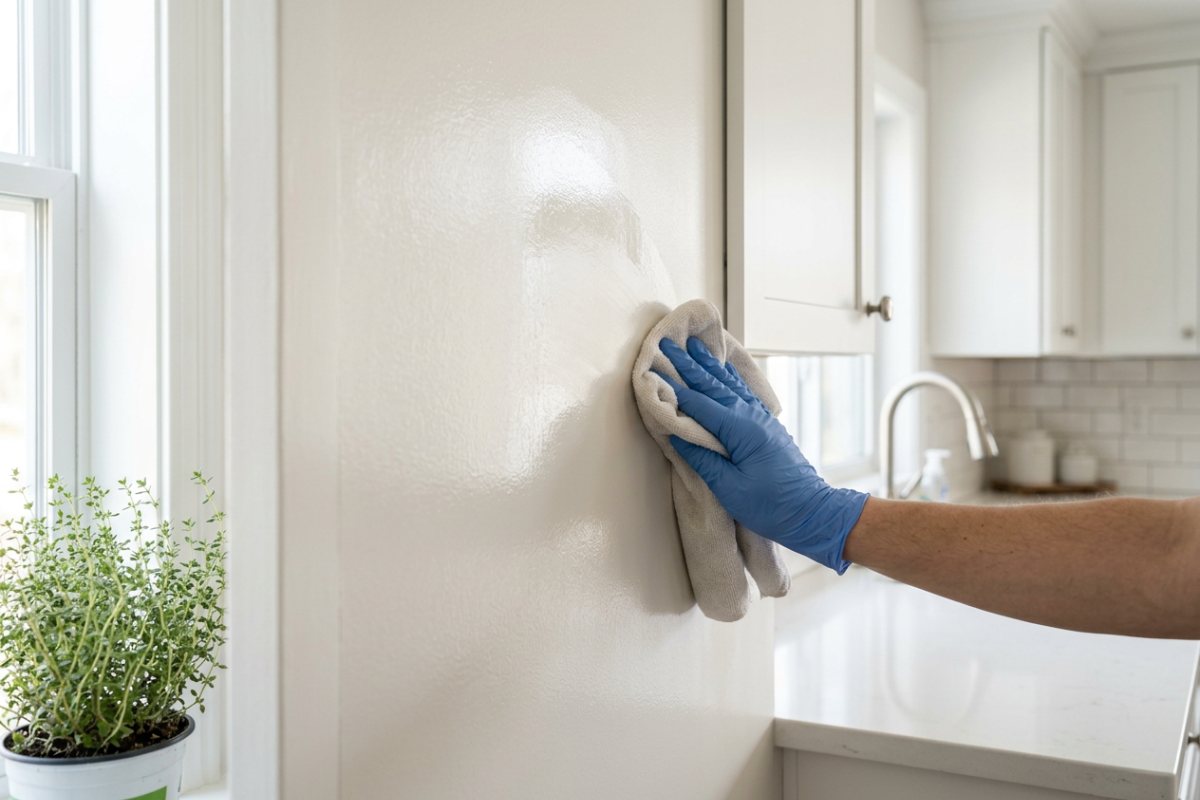
Kitchen Walls
Kitchen walls take grease, steam, splatter, and fingerprints, and then they get cleaned more often than any other room. Low-sheen paint gives out fast under that.
Satin is the practical answer. It resists moisture, wipes clean with a degreasing cleaner, and still looks like a wall rather than a cabinet door.
Pick it alongside everything else in the room. Cabinetry, backsplash, countertops, and under-cabinet lighting all reflect light, and a wall chosen in isolation competes with them.
Bathroom Walls
Bathrooms combine standing humidity with regular cleaning. Paint that can’t shed water will blister, spot, or grow mildew at the ceiling line.
Satin handles most bathrooms. Semi-gloss makes sense in a small bathroom with a shower and no window. Neither one substitutes for prep or for proper ventilation. An exhaust fan that’s undersized or vented into the attic will undo a good paint job.
Walls and trim don’t have to match. Semi-gloss on the door, casing, and baseboard next to satin walls puts the durability where hands go and keeps the large surfaces calmer.
Best Paint Finish for Hallways, Entryways, and High-Traffic Areas

Hallways and entries get touched constantly: shoulders against corners, bags against baseboards, shoes by the door. These surfaces look tired first.
Eggshell covers a normal hallway. Satin is the better call for an entry, stairwell, or mudroom, where you’ll clean the same spots repeatedly.
More sheen makes cleaning easier and flaws louder. Long hallways are lit from one end, and that raking light finds every dent. The same trade-off shows up in commercial spaces, where durability requirements often win out.
How Wall Condition Should Influence Your Paint Finish
Low sheen forgives. High sheen accuses. A matte wall carries a mediocre drywall repair without anyone noticing. The same repair under semi-gloss is the first thing you see walking in.
Fix cracks, holes, old patches, and sanding marks before you commit to anything reflective. In homes built before 1978, sanding old paint can release lead dust, so that prep needs a certified contractor rather than a weekend and an orbital sander. Our repair and construction crew handles that stage before any paint goes up.
If you want smooth, consistent satin or semi-gloss walls, the prep is the project.
When to Choose a Lower-Sheen Finish
Older walls, textured surfaces, patched drywall, and anything with a repair history point toward matte or eggshell. So does a room with one big window, since side light exaggerates texture.
Lower sheen doesn’t cancel the prep requirement. A wall that needs skim coating still needs skim coating.
Eggshell vs. Satin: Which Is Better for Walls?
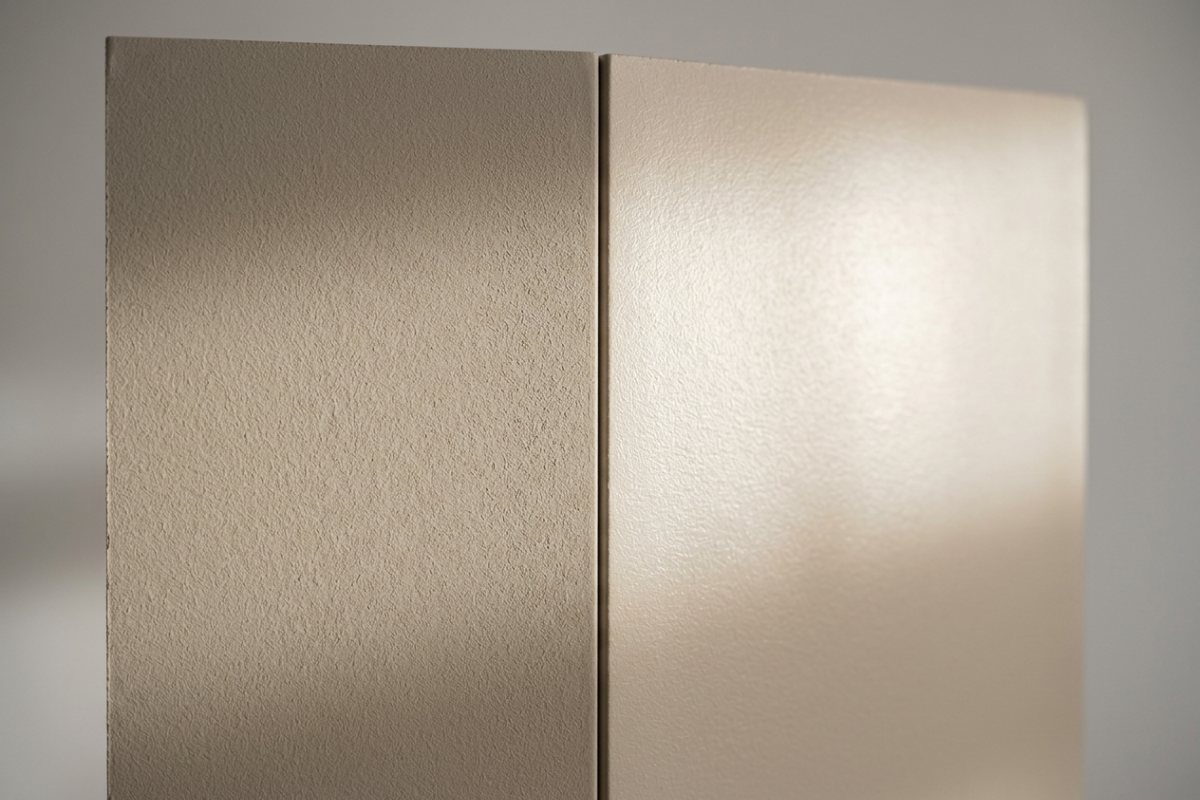
This is the comparison we field most often. It comes down to three things: how much light the wall throws back, how much cleaning it takes, and how much of the wall’s history you want visible.
| Factor | Eggshell | Satin |
|---|---|---|
| Appearance | Softer, subtle sheen | More noticeable sheen |
| Light Reflection | Lower | Higher |
| Durability | Good | Very Good |
| Cleaning | Good | Easier |
| Imperfection Visibility | Lower | Higher |
| Best Use | Living rooms, bedrooms, dining rooms | Kitchens, bathrooms, hallways, family rooms |
The rule: eggshell when appearance matters most, satin when cleaning does. Satin’s harder surface is easier to clean because dirt sits on top of the film instead of settling into it.
Matte vs. Eggshell: Which Finish Should You Choose?
Matte holds its popularity because of how it handles color. With no shine competing, pigment looks deeper and the wall looks like a surface rather than a coating. It also hides more than any other wall finish.
Eggshell trades some of that for washability. On a wall nobody touches, matte wins. On a wall that gets touched, eggshell still looks right in year three.
A practical split: matte in the primary bedroom, dining room, or home office. Eggshell in the living room, guest room, kid’s room, and anywhere connecting to a hallway.
Should All the Walls in Your House Have the Same Finish?
No. A house where every wall matches usually means some rooms got the wrong product. Varying the finish by room is how the paint does its job.
Keep it consistent inside connected spaces. In an open floor plan, a kitchen wall that turns the corner into the living room should carry the same finish around that corner, or the change looks like a mistake instead of a decision.
Coordinate surfaces too. Walls, trim, doors, and ceilings are one system: flat on the ceiling, your chosen sheen on the walls, a step up on trim and doors.
How to Choose the Right Paint Finish for Your Home
Work through these before you buy anything.
- Room conditions. Is the space humid, high-traffic, or exposed to spills and fingerprints?
- Wall condition. Are there visible flaws a reflective finish would put on display?
- Maintenance. How often will these walls get wiped or washed?
- Lighting. How much natural and artificial light reaches the walls, and from what angle?
- Appearance. Do you want a soft, understated surface or a more polished one?
- Preparation. Do the walls need patching, sanding, or priming before any of this?
Then test. Put your chosen sheen on a two-foot square of the wall and check it in morning light, evening light, and lamplight. Screens and store displays won’t tell you the best paint sheen for walls in your room. A free color consultation covers finish as well as color, and usually settles these questions in one visit.
Common Paint Finish Mistakes Homeowners Should Avoid
Choosing the finish off the color chip. Color and finish answer different questions, and finish is the one tied to how the room is used.
Putting high-sheen paint on walls that weren’t prepped for it, then being unhappy about the seams it reveals. The paint didn’t create those flaws. It stopped hiding them.
Assuming more sheen is always better because it’s more durable. Durability, reflection, and appearance pull against each other, and the toughest option is rarely right for a bedroom. Interior paint finishes don’t transfer outdoors either, so treat exterior painting as a separate set of decisions.
When to Hire a Professional Interior Painter
A professional’s first job on an interior project is reading the walls: what’s been patched, what’s failing, what needs skim coating, and which finish(es) the surface can carry.
From there it’s product selection (including low-VOC products in rooms you’ll sleep in that week), then prep, then consistent application. Satin and semi-gloss punish uneven coverage: roller marks that vanish in matte stay visible in a reflective finish.
We’ve been painting homes around Portland since 1995, and finish selection is part of every estimate our team writes. We’d rather flag a wall that needs work before the paint goes on than explain it after.
Conclusion
The best paint finish for walls comes out of the room, not the color card: traffic, moisture, cleaning, light, wall condition, and the look you want.
The short version: matte or eggshell in living and sleeping spaces, eggshell or satin where traffic moves through, satin or semi-gloss where there’s water or regular scrubbing.
If you’re unsure which way a room should go, or whether your walls are ready for the finish you want, get in touch and we’ll walk the rooms with you before the project starts.
FAQs
Can you use different paint finishes in the same room?
Yes, and most rooms already do. Flat on the ceiling, eggshell or satin on the walls, semi-gloss on trim and doors is the standard combination. Avoid two different wall finishes in one room, which shows as an obvious seam where they meet.
Does paint sheen affect the color of a wall?
It changes how the color looks without changing the color itself. Higher sheen reflects more light, so the same shade appears lighter and less saturated in satin than in matte. If you matched a color in a low sheen and then switched up, expect the wall to look brighter.
What paint finish is easiest to touch up?
Flat and matte. A touch-up blends because there’s no shine to mismatch. Satin and glossier finishes show the repair as a patch of different reflectivity.
Is satin paint too shiny for interior walls?
Not for kitchens, bathrooms, laundry rooms, or busy hallways, where the shine buys cleanability. In a bedroom or formal living room it can look harder than those spaces call for, and it shows flaws eggshell would have covered.
Should ceilings and walls have the same paint finish?
Usually not. Flat is the standard ceiling finish because it hides drywall seams and kills glare from overhead fixtures. Bathroom and laundry ceilings are the exception, where a low-sheen ceiling paint handles moisture better than true flat.