
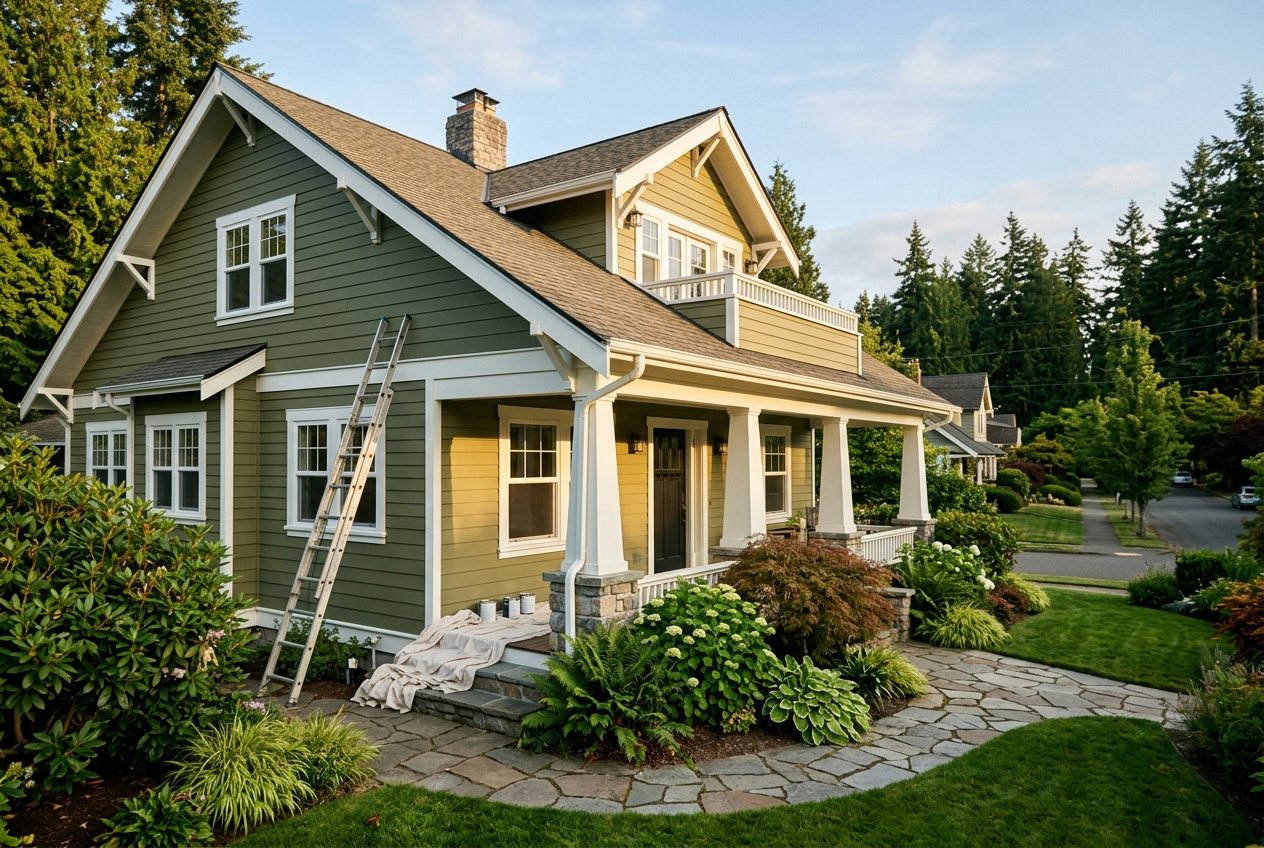
Homeowners rarely think about their exterior paint until something looks off: a chalky finish, a peeling corner, a color that’s gone flat. Then the same question comes up: how often should you paint your house exterior? It depends on your siding, the sun and rain your walls take on, and how well your last paint job was prepped and applied.
A repaint isn’t just about curb appeal. Quality exterior house painting services create the seal between your siding and the moisture, sunlight, and temperature swings that damage it over time. When that seal fails, water gets into the wood and starts problems that cost far more than a paint job.
This guide covers the factors that determine how often to repaint, the signs to watch for before your next paint job, and how to tell whether your home needs a full repaint or a few targeted fixes. The same principles apply to rental homes and small commercial buildings, not just single-family houses.
Key Takeaways
- Most wood siding needs a fresh coat every five to seven years; fiber cement, brick, and vinyl can go longer.
- Peeling, chalking, and soft or discolored wood are the clearest signs your house needs painting.
- Waiting too long turns a paint job into a wood rot repair.
- Spot repairs work for small, isolated damage; full repaints make sense once fading or peeling spreads across multiple walls.
- Late spring through early fall is the most reliable window for exterior painting in the Portland area.
Why Exterior Paint Is More Than Just a Cosmetic Upgrade
A fresh coat of paint makes a house look good, but its real job is protection. Paint keeps rain, humidity, and UV rays from reaching your siding and trim. Once that layer breaks down, moisture starts working its way into the wood underneath.
Quality exterior paint extends the life of your siding and trim by years. Trim tends to fail first, since it collects more water at joints, corners, and end grain than flat wall surfaces do.
And there’s always appeal. Recent real estate industry data shows exterior improvement projects consistently outperform interior remodels in resale value, largely because a buyer’s first impression forms from the street, before they ever walk through the door.
How Often Should You Paint Your House Exterior?
The answer depends on what your siding is made of.
| Exterior Material | Recommended Repainting Frequency | Notes |
|---|---|---|
| Wood siding | Every 7-10 years | Depends on sun exposure and maintenance |
| Aluminum siding | Every 5–10 years | Requires proper surface preparation |
| Stucco | Every 5–10 years | Climate significantly affects longevity |
| Fiber cement siding | Every 10–15 years | High-quality finishes last longer |
| Brick (painted) | Every 15–20 years | Only if previously painted |
| Vinyl siding (painted) | Every 8–10 years | Quality paint and prep are critical |
These numbers are general guidelines. Your actual repainting schedule depends on climate, the quality of the paint used last time, and how well your home has been maintained since then.
A visual inspection tells you more than counting years since the last paint job. Check for chalking, peeling, and soft spots regardless of how long it’s been.
Factors That Affect How Long Exterior Paint Lasts
| Factor | Impact on Paint Life | Homeowner Consideration |
|---|---|---|
| Climate | UV rays, rain, snow, humidity | Portland’s wet climate requires regular inspections |
| Sun exposure | Faster fading and breakdown | South- and west-facing walls age faster |
| Paint quality | Better durability | Premium paints last longer |
| Surface preparation | Improves adhesion | Proper prep prevents premature failure |
| Previous maintenance | Extends lifespan | Cleaning and repairs improve longevity |
| Professional application | Better long-term performance | Experienced painters ensure proper coverage |
Top 3 Signs It’s Time to Repaint Your House Exterior
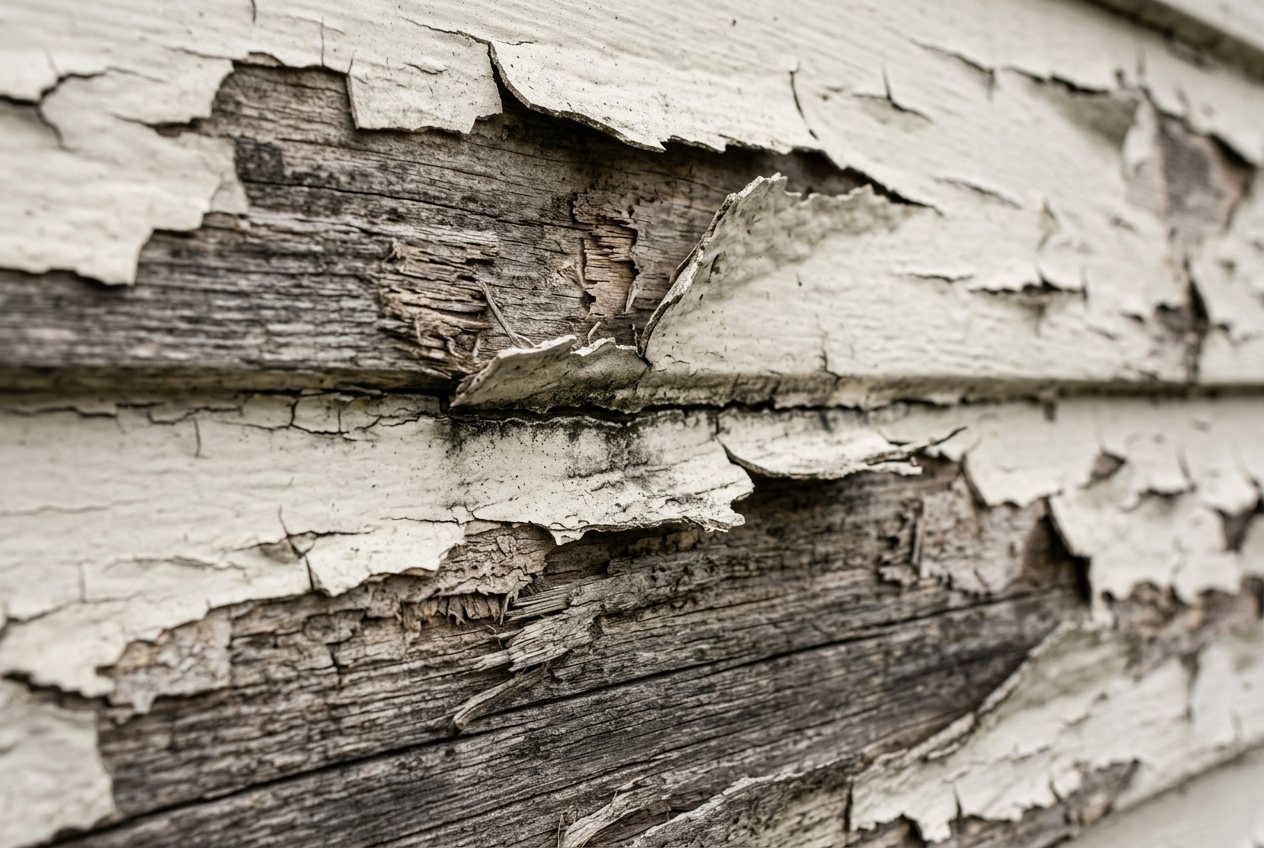
Knowing when to repaint a house comes down to reading these signs rather than counting years, and the clearest signs a house needs painting show up in three places: the paint itself, the color, and the surface underneath.
Visible Paint Damage
Peeling, cracking, blistering, and bubbling paint are the clearest signs your exterior needs attention. Cracks and blisters break the paint’s seal, and once that happens, moisture gets a direct path to the wood underneath.
Color Changes
Fading, chalking, and uneven color show up before paint physically peels. Chalking is the telltale sign: run your hand across the siding, and if it comes back covered in a fine powder, UV exposure has broken the paint film down.
Surface Deterioration
Exposed wood, mold, mildew, dry rot, and cracked caulking point to deeper problems than a worn paint job. If wood feels soft or spongy when you press on it, that section needs repair, not just a fresh coat. Structural issues like this should get fixed before repainting, since new paint applied over rotted wood only hides the problem. Our construction and repair team handles this kind of prep work before a repaint begins.
Why Waiting Too Long Can Cost More
Neglected paint doesn’t stay a merely cosmetic problem for long. Once water gets behind the paint film, it leads to wood rot, mold growth, and siding damage that spreads.
Repainting on schedule costs a lot less than replacing rotted siding or trim later. A full repaint typically runs a few thousand dollars; replacing damaged siding boards, trim, and the paint job that comes with it runs several times that.
Treat repainting as home maintenance, not an upgrade. The homes that hold their value longest are the ones where small problems get fixed before they become big ones.
Should You Repaint the Entire House or Only Certain Areas?
Not every paint problem calls for a full repaint.
| Situation | Spot Repairs | Full Repaint |
|---|---|---|
| Minor localized damage | ✔ | |
| Extensive peeling | ✔ | |
| Significant fading | ✔ | |
| Small trim damage | ✔ | |
| Multiple elevations affected | ✔ | |
| Selling your home | ✔ |
Spot repairs make sense for small, isolated damage: a section of trim, one side of a shed, a small patch behind a downspout.
Full repaints avoid the mismatched patches that spot painting on faded or unevenly weathered siding tends to create, since paint ages differently depending on sun exposure.
Best Time of Year to Paint Your House Exterior
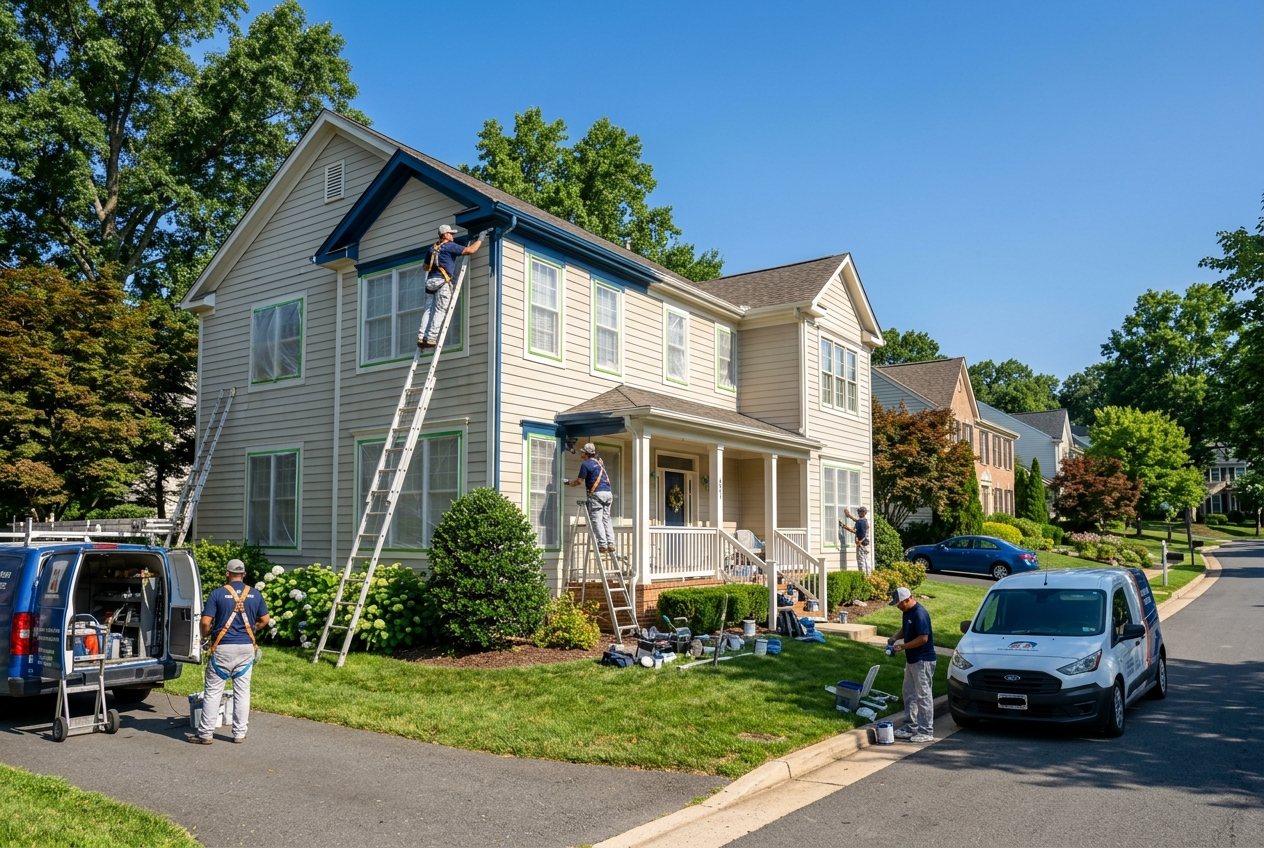
Temperature and humidity affect how paint bonds and cures, so timing your project is kind of part of the prep work. Most exterior paints need moderate temperatures and moderate humidity to cure properly, so cold, damp mornings and evenings aren’t the right window even if the afternoon is clear.
Late spring through early fall gives the most reliable stretch of painting weather in the Portland area. Summer months bring the driest, most stable conditions, and early fall still offers workable temperatures before the rains return in earnest.
Painting contractors book up fast once the weather turns. Scheduling your project in late winter or early spring gets you ahead of that rush and a spot on the calendar before your ideal window arrives.
How to Extend the Life of Your Exterior Paint
Exterior paint maintenance between full repaints starts with a simple yearly walk around your home. Look for chalking, cracking, and any spots where caulking has pulled away from trim or windows.
Routine pressure washing removes the dirt, mildew, and algae that build up on exterior surfaces between paint jobs. Left alone, that buildup traps moisture against the surface and shortens paint life.
Repair damaged caulking, trim, and siding as soon as you notice it. Small gaps let water in long before the damage is visible from the street.
Professional maintenance between full repaints, like a wash and inspection, adds years to a paint job that would otherwise start failing early.
Why Hiring Professional Exterior Painters Makes a Difference
| DIY Painting | Professional Painting |
|---|---|
| Limited surface preparation | Comprehensive preparation process |
| Basic tools and equipment | Professional-grade equipment |
| Variable finish quality | Consistent, long-lasting results |
| Longer project timelines | Efficient project completion |
| Higher risk of premature failure | Manufacturer-recommended application methods |
| Limited workmanship protection | Professional expertise and warranties (where offered) |
Preparation accounts for most of a paint job’s longevity, and it’s also the step most often rushed or skipped on a DIY project.
An experienced crew knows how to handle surface repairs, choose the right product for your siding, and apply it correctly the first time. Before hiring anyone, confirm you’re working with a legitimate, licensed contractor.
Why Portland Homeowners Face Unique Exterior Painting Challenges
Portland’s climate puts more stress on exterior paint than drier regions do. Rain and moss are a near-constant presence, and Portland’s airport averages close to 37 inches of rain a year, most of it falling between October and April.
That moisture load means paint on Portland homes has less time to dry between weather events, and siding stays damp longer than it would in a drier climate. Regular inspections catch the early signs of moisture damage before they turn into rot or mold.
Conclusion
How often should you paint your house exterior? It depends less on the calendar than on what your walls are actually telling you: your siding material, how much sun and rain your walls take on, and how well your last paint job was maintained.
If chalking, peeling, or soft wood sound familiar, don’t wait for it to get worse. Contact us for a free estimate, and we’ll walk your home’s exterior with you to figure out if it’s ready for a full repaint or just a few targeted repairs. And whoever you choose to hire, take a minute to verify a contractor’s license before signing anything.
FAQs
How can I tell if my exterior paint is failing if it still looks good?
Get close and touch it. Chalking is the first giveaway: run your hand across the siding, and if a fine powder comes off, UV exposure has broken down the paint’s surface even if the color still looks even from the street. Check trim, corners, and end grain too, since paint fails there before it fails on flat wall surfaces.
Does pressure washing remove the need for repainting?
No. Pressure washing cleans dirt, mildew, and algae off the surface, which helps paint last longer, but it doesn’t restore a paint film that’s already cracked, chalking, or peeling. Treat it as maintenance between paint jobs, not a substitute for one.
Should I repaint my house before selling it?
In most cases, yes, if the current paint shows fading, peeling, or an outdated color. Exterior paint is one of the more affordable projects that shapes a buyer’s first impression, and it typically returns much of its cost at resale.
Can changing exterior paint colors affect my home’s resale value?
It can, in both directions. Neutral, well-maintained colors tend to appeal to the widest range of buyers, while bold or unusual choices can be polarizing. A color consultation before you repaint helps you land on something that suits your home without narrowing your buyer pool later.
How long does a professional exterior house painting project typically take?
Most single-family homes take three to five days from prep through the final coat, depending on size, siding material, and how much repair work is needed first. If you’re planning ahead, many homeowners pair an exterior repaint with interior painting work while the crew is already on site.