

Painting a ceiling sounds simple enough until you’re standing on a ladder with paint dripping into your eyes and streaks forming faster than you can roll them out. Knowing how to paint a ceiling properly, with the right preparation, tools, and technique, makes the difference between a smooth, clean result (and process) and a disaster. We’ve been painting ceilings for Portland-area homeowners since 1995, and in this guide we’ll walk you through every step. Whether you’re freshening up a single bedroom or repainting your entire home, the process stays the same — and the prep work matters just as much as the painting itself.
Tools and Materials You’ll Need to Paint a Ceiling
Before you open a single can of paint, make sure you have everything you’ll need. Running out of supplies mid-job or making do with the wrong ones is never necessary and always painful.
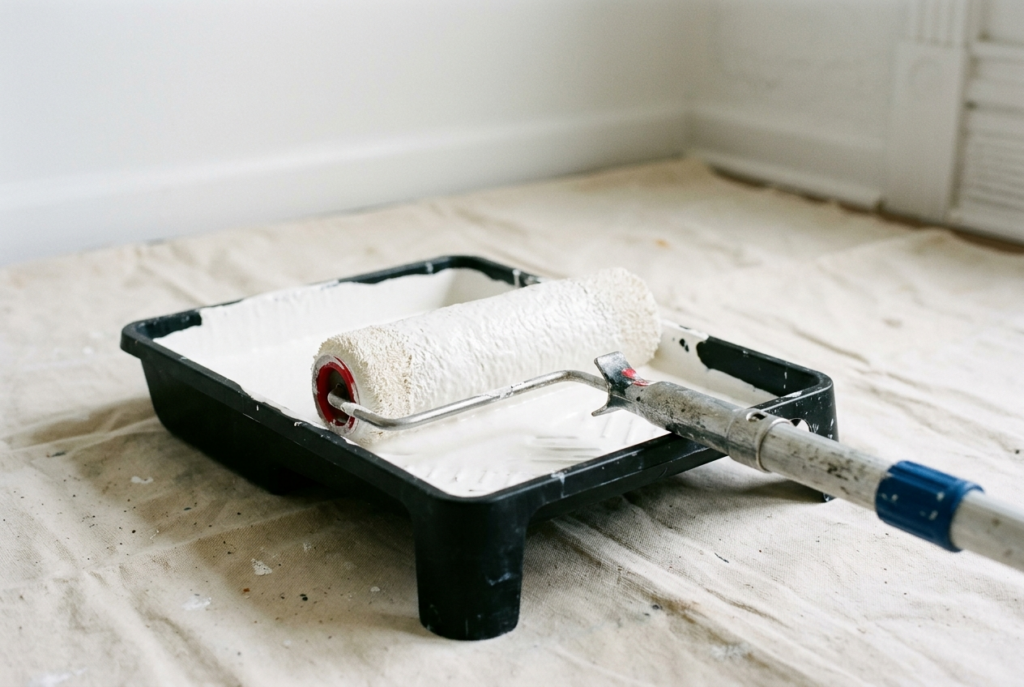
Here’s what you’ll need: a paint roller with an extension pole, a 2½-inch angled brush for cutting in, a paint tray, painter’s tape, and drop cloths to protect your floors and furniture. For the roller cover (also called a nap), use a thickness of 3/8 inch to 1/2 inch. Thinner naps leave too little paint on a textured surface, while a 1/2-inch nap works well on most standard drywall ceilings.
For the paint itself, use ceiling paint rather than regular wall paint. Ceiling paint is typically thicker, which means it splatters less during rolling and gives better coverage in fewer coats. Most ceiling paints come in a flat white finish, which hides imperfections and reduces glare from overhead lighting. If you’re going with a colored ceiling, a flat or matte finish keeps the look comfortable without making it shiny.
How to Prepare a Ceiling Before Painting
Good prep work is what separates a lasting paint job from one that bubbles, peels, or looks uneven in a year. Skip this step and you’ll pay for it later.
Start by cleaning the ceiling thoroughly. Use a dry microfiber mop or a vacuum with a brush attachment to remove dust, cobwebs, and loose debris. Grease stains above kitchen areas should be wiped down with a mild degreaser. Smoke or water stains need extra attention: apply a stain-blocking primer before your finish coat, or those marks will bleed right through.
Next, inspect the surface for cracks, nail pops, and holes. Fill small cracks and holes with lightweight spackling compound, let it dry completely, and sand it smooth with 120-grit sandpaper. Larger cracks may indicate settling or moisture issues that you should investigate before painting over them.
Primer is essential when the ceiling hasn’t been painted in a long time, when you’re going from a dark color to white, or when you’re painting over new drywall. New drywall is porous and will absorb paint unevenly without a primer coat first. For water stains, a shellac-based or oil-based stain-blocking primer outperforms a latex primer every time.
Our post on how to prep a room for painting covers the full prep checklist if you want to go deeper before starting the job.

Step-by-Step Guide: How to Paint a Ceiling
Once your ceiling is prepped and your supplies are ready, follow these steps in order.
Step 1: Protect the Room
Before any paint touches the ceiling, protect everything below it. Move furniture out of the room if it’s possible. For anything that can’t be moved, push it to the center of the room and cover it completely with drop cloths or plastic sheeting.
Cover the entire floor with canvas drop cloths. Plastic sheeting is cheaper but tends to bunch and slip underfoot, which is a hazard, especially when you’re on a ladder. Run painter’s tape along the top of the walls where they meet the ceiling, and mask off any light fixtures or ceiling fans. Removing a light fixture entirely makes cutting in more precise and considerably easier.
Step 2: Cut In the Edges
Cutting in means painting the border of the ceiling where it meets the walls with a brush, before you roll. This gives you clean lines and makes the roller pass much easier.
Load a 2½-inch angled brush with ceiling paint and work in small sections, two or three feet at a time. Use smooth, controlled strokes with a light touch near the wall line. If you’re also painting the walls, the line doesn’t need to be perfect here. If the walls are already finished, take your time; work all the way around the perimeter before picking up the roller.
Step 3: Roll the Paint Evenly
With the edges cut in, it’s time to roll. Pour paint into a roller tray, load the roller cover evenly, and roll off the excess on the ridged ramp before applying it to the ceiling. _An overloaded paint roller is the number-one cause of drips._Work in sections roughly three to four feet wide. Starting near a window and rolling toward the opposite wall, in line with the natural light, helps you spot thin areas as you go. Use smooth, overlapping strokes — either straight parallel passes or a wide “W” pattern — and maintain consistent pressure throughout.
Keep an extension pole on your roller. Rolling from the floor is significantly less tiring than rolling from a ladder, and it gives you better control over pressure and angle. Roll at a slow, steady pace. If you’re getting heavy splatter, you’re either moving too fast or loading too much paint on the roller.
Step 4: Apply a Second Coat
Allow the first coat to dry fully before applying the second. Most water-based flat ceiling paints are ready for recoating within two hours under normal conditions, though humidity and temperature do affect that timeline. That’s something to keep in mind during Oregon’s cooler, wetter months. Run your hand lightly over the painted area before committing. If paint transfers to your hand, it’s not ready.
For the second coat, repeat the same cut-in and roll sequence. Work in the same direction as the first coat for the most uniform finish. The second coat catches thin spots and evens out any texture variation left from the first pass. Most standard white ceilings look complete after two coats. A heavily stained or tinted ceiling may need a third.

How to Paint a Ceiling Without Streaks
Streak-free ceiling painting comes down to three things: keeping a wet edge, using quality materials, and not overloading your roller.
A wet edge means never letting one section of paint dry before you connect it to the next. When paint dries partway and you roll back over it, you get lap marks, those visible ridges where two applications met. The fix is to work at a pace that keeps the edge of your current section wet. On hot days or in dry conditions, work in smaller sections. On cool, humid Oregon days, you’ll have a little more room.
The quality of your roller cover matters more than most people expect. A cheap roller sheds fibers, creates an uneven surface, and makes a streak-free finish practically impossible. Invest in a high-quality 3/8-inch to 1/2-inch roller cover, and don’t try to stretch it across multiple rooms or multiple days.
Keep paint loading consistent. Dip the roller, roll off the excess, and apply with even pressure from one end of the stroke to the other. Inconsistent pressure is what creates those light and dark streaks that show up after the paint dries. On textured ceilings, go over each section in multiple directions on the final pass to push paint into the texture rather than letting it sit on the surface.
The Best Way to Paint a Ceiling: Pro Tips
After 30-plus years of ceiling painting, we’ve found that a few professional habits consistently make a difference. These ceiling painting tips apply whether you’re tackling one room or a whole house.Always paint the ceiling before the walls. Paint drips, and it’s far easier to cut in fresh wall paint cleanly against a finished ceiling than to repaint a wall because of ceiling splatter. The standard order for a complete room is ceiling first, walls second, trim last.
Use a good side light. After rolling a section, step back and examine it with a bright lamp held at a low angle. Side-lighting reveals roller marks, thin spots, and areas that need another pass far better than flat overhead illumination.
Consider a paint conditioner if you’re working in hot or dry conditions. Adding a small amount to your ceiling paint extends its open time slightly, making it easier to maintain a wet edge across larger areas without lap marks.
And respect the dry time. Two coats applied too close together is one of the most reliable ways to end up with an uneven ceiling. Patience between coats pays off.
Common Ceiling Painting Mistakes to Avoid
Even experienced DIYers run into problems on ceiling jobs.
Skipping primer or prep work is the worst mistake you can make here. You can use the best paint available, but if the ceiling has grease, water stains, or bare drywall underneath, the finish coat won’t hold. Primer on problem surfaces isn’t optional — it’s the difference between a paint job that lasts years and one that starts peeling right away.
Using the wrong tools or cheap paint is a close second. Low-cost rollers shed fibers, leave inconsistent texture, and make the whole job harder than it needs to be. Discount ceiling paint tends to be thinner, which means more coats and more splatter. Spending a little more on materials saves time and frustration.
Painting too quickly or unevenly accounts for most of the lap marks and streaks we see on DIY jobs. Working too fast breaks the wet edge. Pressing harder on the roller at the start of a stroke than at the end creates visible sheen differences once the paint dries. Take your time, work in consistent sections, and keep your pace steady throughout.
How Long Does Ceiling Paint Take to Dry?
Ceiling paint dries in two stages: touch-dry and fully cured. Touch-dry typically happens within two hours for most water-based flat ceiling paints under normal conditions. At this point the surface won’t transfer to your hand, but it isn’t ready for a second coat.
Fully cured paint (when the film has hardened completely) takes closer to 30 days, though the ceiling will look and function normally before that. The curing stage matters most if you’re planning to wash the surface or if something will make direct contact with it repeatedly.
Oregon’s climate adds another variable here. Cool, damp weather slows drying noticeably. If you’re painting in fall or winter, allow extra time between coats — closer to four hours than two — and make sure the room is well ventilated. Running a fan to circulate the air (not pointed directly at the wet ceiling) can help.
Apply the second coat once the first is fully dry to the touch and shows no wet spots. If you’re unsure, wait longer. Applying the second coat over a partially wet first coat is a reliable way to end up with peeling and bubbling down the road.
Should You Paint the Ceiling or Walls First?
Paint the ceiling first.
This is one of the firm rules of interior painting, and it exists for a simple reason: paint drips downward. When you roll a ceiling, some paint will fall onto the walls even with tape in place. If your walls are already finished, that means extra work.
By painting the ceiling first, you can roll freely without worrying about what’s below. Once the ceiling is dry, tape off the edges and proceed with the walls. Any ceiling drips on the walls get covered in the next step.
This sequencing applies to trim as well. The standard order is ceiling, then walls, then trim. Our interior painting team follows this on every job we take.
DIY vs Professional Ceiling Painting: What’s Better?
Ceiling painting is one of those jobs that looks simpler than it is. Here’s a side-by-side look to help you decide what makes sense for your situation.
| Factor | DIY Ceiling Painting | Professional Ceiling Painting |
|---|---|---|
| Cost | Lower upfront cost (only tools and paint) | Higher cost due to labor and expertise |
| Time | Takes longer, especially for beginners | Faster completion with a skilled team |
| Finish Quality | May have streaks or uneven areas | Smooth, even, and professional finish |
| Effort | Physically demanding and messy | No effort required from homeowner |
| Tools & Equipment | Must buy or rent tools | Professionals bring all equipment |
| Risk | Higher chance of mistakes | Minimal risk with experienced painters |
| Best For | Small rooms, simple jobs, DIY lovers | Large areas, high ceilings, perfect results |
For a small, accessible room with a flat ceiling in decent condition, DIY is entirely manageable if you’re willing to follow the prep steps and take your time. For anything involving high ceilings, textured surfaces, water damage, or large square footage, the results are almost always better (plus faster) with a professional crew.
When to Hire a Ceiling Painter
Most homeowners can handle or figure out how to paint a small bathroom or bedroom ceiling without much trouble. Though, if you don’t have the right equipment, it may be easier to hire a professional to do the job as you can spend hundreds of dollars to get the right tools. Larger or vaulted ceilings are more difficult for homeowners to do themselves so hiring someone may be the best choice.
Professional Ceiling Painting Services with Absolute!
With almost 30 years of experience, Absolute Painting can help you with any ceiling painting project you might have. We always make sure all of your surfaces and valuables are protected and the ceilings are painted the right way so they look great for many, many years!
If you’re in the Portland metro area, please don’t hesitate to reach out to our team. We look forward to hearing from you!