
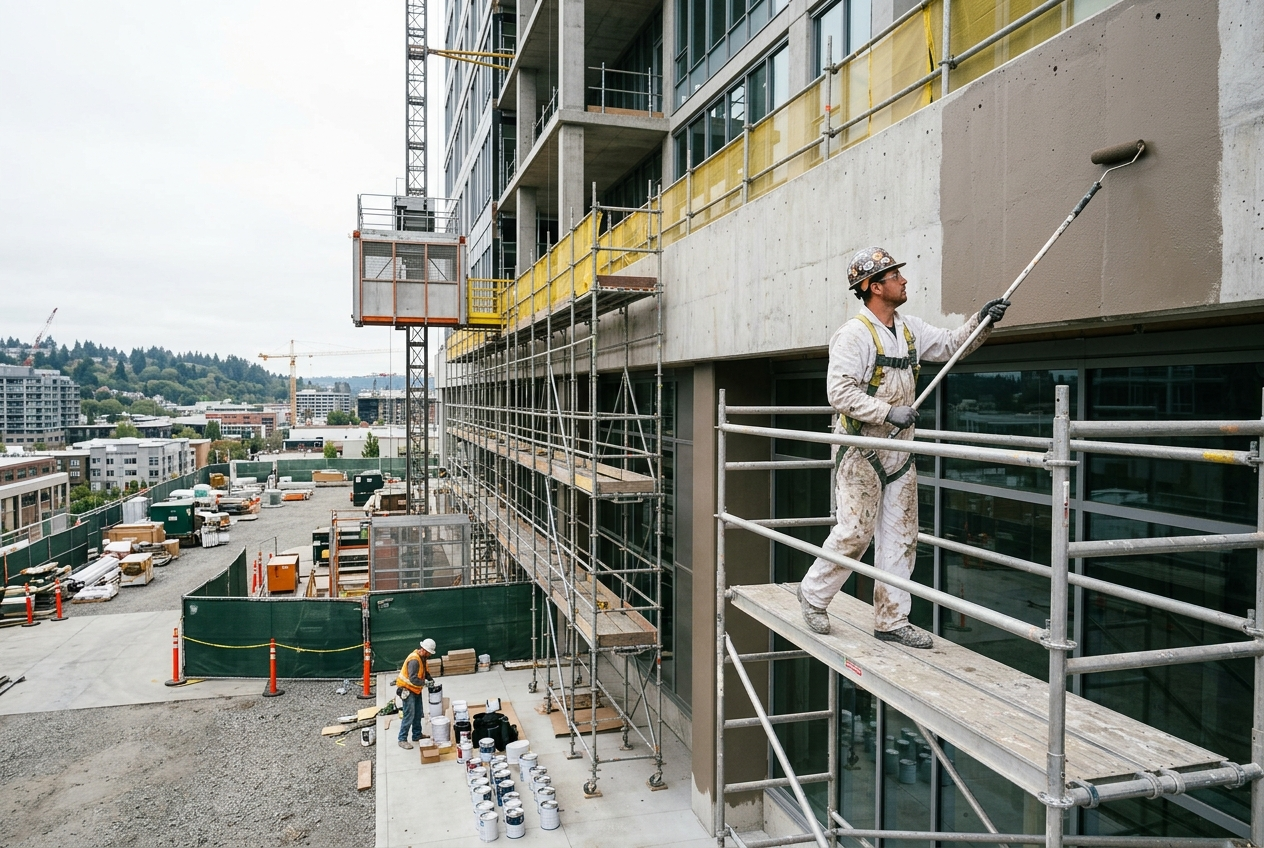
Is commercial painting more expensive than residential? It’s a question we hear often from Portland-area property owners, especially those who manage both a home and a business property. The short answer is yes — commercial painting projects typically cost more. But the reasons for that are worth understanding because they depend on your specific project, the condition of your surfaces, and what you’re trying to accomplish.
In this guide, we’ll break down the key differences in cost between commercial and residential painting, walk through the main pricing factors, and share practical tips for getting the most value out of your investment.
What Is Commercial Painting?
Commercial painting covers painting work on business and income-producing properties — offices, retail stores, warehouses, restaurants, apartments, etc. These projects are defined by their scale, their specialized materials, and the demands that come with painting an active business space.
Crews often work overnight or on weekends to avoid disrupting business operations. Safety compliance, thorough surface preparation, and coordinated scheduling are all standard. At Absolute Painting, we’ve been providing commercial painting services across Portland, Hillsboro, and Beaverton since 1995; we know what it takes to deliver results without interrupting your operations.
What Is Residential Painting?
Residential painting focuses on private homes — single-family houses, condos, and townhomes. The work is more personal, driven by aesthetic goals, color preferences, and the comfort of the people who live there.
Residential projects are generally smaller in scale than commercial jobs, with more flexible scheduling and fewer regulatory requirements. Prep work tends to be lighter, though detailed trim, cabinetry, or specialty finishes can add real time and cost. Our interior painting services serve homeowners throughout the Portland area who want quality results without having to manage every detail themselves.
Is Commercial Painting More Expensive Than Residential? (Quick Answer)
Usually, but not always. Commercial painting typically costs more than residential painting, both in total investment and overall complexity. Commercial buildings cover more square footage, require larger crews, and often need specialized coatings and equipment that residential jobs don’t. Safety regulations, tight deadlines, and after-hours scheduling all add to commercial costs.
That said, cost per square foot doesn’t always tell the whole story. A high-end home with custom finishes, extensive trim, and complex architecture can approach commercial price levels. Painting a small retail space may cost less than painting a large home. The details of your specific project matter more than the category it falls into, which is why a professional estimate is always the most reliable place to start.
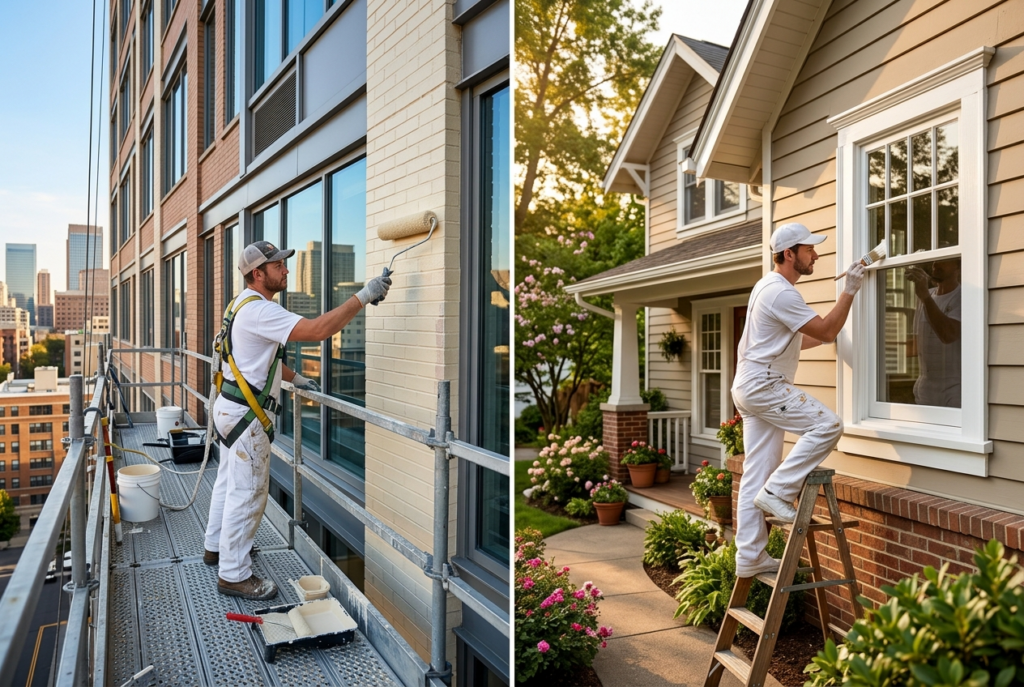
Commercial vs Residential Painting Cost Comparison
| Factor | Commercial Painting | Residential Painting |
|---|---|---|
| Average Cost (Per Sq. Ft.) | $2 – $6+ depending on scale and materials | $2 – $5 depending on finishes and detail |
| Total Project Cost | Higher overall due to large spaces | Lower overall due to smaller areas |
| Project Size | Large buildings (offices, warehouses, retail spaces) | Homes, apartments, condos |
| Labor Requirements | Large crews, faster deadlines | Smaller crews, flexible timelines |
| Surface Preparation | Extensive (repairs, cleaning, compliance work) | Moderate (patching, sanding, priming) |
| Paint Type | Industrial-grade, durable coatings | Decorative, aesthetic-focused paints |
| Equipment Needed | Lifts, scaffolding, safety gear | Basic tools (ladders, rollers, brushes) |
| Accessibility | Often complex (high walls, large exteriors) | Easier access in most cases |
| Timeline | Tight schedules, often after-hours work | More flexible scheduling |
| Customization Level | Limited, function-focused | High, design and color-focused |
| Cost Variability | Depends on regulations, scale, and materials | Depends on design detail and finishes |
Average Commercial Painting Rates
Commercial painting generally runs about $2 to $6 (but sometimes more) per square foot, depending on building size, surface condition, coating type, and access requirements. Larger, more uniform spaces such as warehouses or open office floors tend to come in on the lower end of that range. Smaller commercial spaces with extensive prep needs, specialty coatings, or access challenges push the per-square-foot cost higher.
Labor accounts for a significant share of commercial budgets. Larger crews are often needed to meet deadlines, and work completed after hours or on weekends carries a premium. Equipment such as lifts, scaffolding, and commercial-grade sprayers also factor into the final cost.
Residential Painting Costs
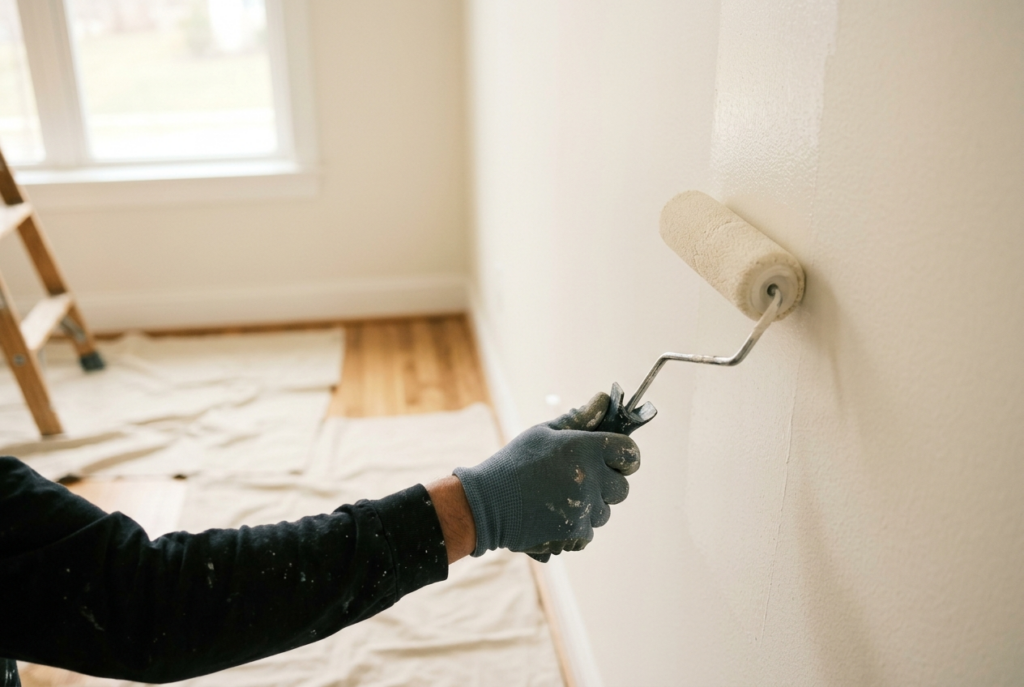
Residential painting typically ranges from about $2 to $5 per square foot for interior work, depending on the level of detail, paint quality, and surface condition. Exterior residential pricing varies based on home size, siding type, and how much surface prep is needed before paint can be applied.
Paint quality plays a meaningful role in pricing too. We use Sherwin-Williams and Benjamin Moore products on every project because they offer better moisture resistance and long-term performance, which is especially important in Portland’s wet climate. Investing in quality paint upfront reduces how often you need to repaint.
Key Factors That Affect Painting Costs
Project Size and Scale
Larger spaces require more labor, more materials, and more time. A commercial building can cover tens of thousands of square feet across multiple levels, all of which need prep and priming, in addition to the actual paint.
Residential projects are smaller by nature, but the detail work shouldn’t be underestimated. A large home with many rooms, extensive trim, and custom color selections can take just as long as a simple commercial space, and cost accordingly.
Labor and Crew Requirements
Commercial projects often require larger crews working under tight deadlines. When a business can’t close for a week, the work has to move faster. That often means more painters, more coordination, and higher labor costs.
Residential painting typically involves a smaller team with more scheduling flexibility. That flexibility can help homeowners manage costs by choosing off-peak timing or breaking the project into phases.
Surface Preparation
Surface prep is one of the most significant hidden cost factors in any painting project. On the commercial side, buildings may have years of buildup, damaged drywall, peeling coatings, or surfaces that require cleaning, repair, and compliance-related steps before paint can go on.
Residential prep is usually lighter but older homes or those with substantial wear can require more involved prep work.
Type of Paint and Materials
Commercial coatings are engineered for durability in high-traffic environments. Industrial-grade paints, epoxy floor coatings, moisture barriers, and anti-slip finishes cost more than standard residential products and often require specialized application methods and additional coats.
Residential painting, on the other hand, focuses on aesthetic finishes, sheen levels, and color accuracy. Materials for residential interiors and exteriors are often lower than what commercial coatings demand, but higher-end residential products can narrow that gap.
Accessibility and Equipment
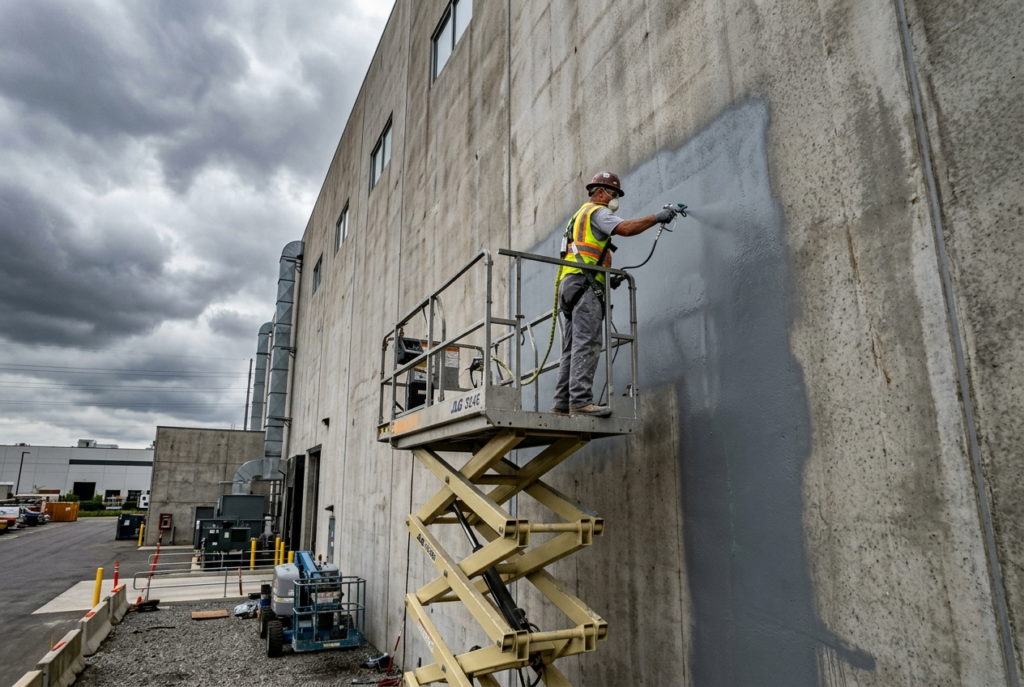
High ceilings, large exterior walls, rooflines, and restricted areas in commercial buildings often require lifts, scaffolding, and safety gear that add both time and cost. Multi-story buildings or facilities with limited access points can significantly extend a project timeline.
Most residential projects are more accessible. Standard ladders and tools handle the majority of home painting work, which keeps equipment costs more manageable.
Timeline and Scheduling
Commercial timelines are often more rigid and awkward than residential ones. A retail store needs to stay open. A medical facility can’t close a wing for two weeks. That pressure means crews work faster, sometimes around the clock, and that intensity carries a cost premium.
Residential projects usually offer more flexibility. Homeowners can work around their own schedules, allow the project to span multiple days, and adjust timing based on weather or budget constraints.
Why Commercial Painting Is Often More Expensive
The combination of scale, labor, materials, equipment, and regulatory requirements adds up quickly on commercial projects. Safety compliance is a factor too — crews working on lifts or scaffolding need proper training, and job sites have to meet OSHA standards.
Business disruption adds another layer. When a project must be completed without interrupting daily operations, it demands more planning, more people, and more precise execution. For a full picture of what our team handles on commercial jobs, explore our commercial painting services for Portland-area businesses.
When Residential Painting Can Be Expensive
As we’ve said, residential painting isn’t always cheaper. Custom finishes, detailed millwork, high-end products, and architecturally complex homes can push residential costs well above average. A large home with vaulted ceilings, extensive cabinetry, intricate trim, and multiple specialty colors can rival the complexity and cost of a mid-sized commercial project.
Multi-story homes with difficult exterior access, surfaces to repair, or projects involving specialty techniques like limewash or Venetian plaster also carry premium pricing.
Cost-Saving Tips for Painting Projects
Plan Your Project in Advance
Rush jobs cost more. When timelines are compressed, contractors charge a premium for speed and flexibility. Planning well in advance, especially for larger commercial spaces, allows you to schedule during slower periods, gather multiple quotes, and avoid the price spike that comes with quick turnarounds. In Portland, late fall and winter tend to be quieter for exterior work, which can improve availability and pricing for interior projects.
Choose the Right Paint
Cutting costs on paint quality almost always costs more in the long run. Cheaper products require more coats, fade and chip faster, and need to be redone sooner. Investing in quality paint upfront, like the premium Sherwin-Williams and Benjamin Moore lines we use, ensures better coverage, a longer-lasting finish, and fewer touch-ups down the road. This is one area where spending a little more protects your investment over the life of the property.
Bundle Services
Combining interior and exterior painting in a single project often results in better overall pricing than scheduling them separately. Mobilization (moving equipment, staging materials, and coordinating the crew) happens once instead of twice. Pairing painting with pressure washing can also improve results and extend the life of the new finish by cleaning and prepping surfaces before paint goes on.
Work with a Professional Painter
DIY painting may seem like a way to save money, but mistakes in prep, application, or finishing often cost more to correct than professional work would have cost in the first place. Experienced painters bring the right tools, the right materials, and the skill to do it right the first time. Detailed quotes from a reliable contractor also prevent budget surprises — you know what you’re paying for before work begins.
Why Choose Absolute Painting for Your Project
We’ve been painting Portland-area homes and businesses since 1995. As a family-owned company, our reputation is built project by project, and we take that seriously every time we start a job.
On the commercial side, we understand the planning, coordination, and precision that business properties demand. On the residential side, we bring the same craftsmanship to every room and surface. We use only Sherwin-Williams and Benjamin Moore paints, maintain clean and organized job sites, and communicate clearly through every step of the process.
If you’re comparing costs or ready to move forward, our team can walk you through what to expect. Request a free estimate and get clear guidance from painters who know this business.
Final Thoughts
So is commercial painting more expensive than residential? In most cases, yes — and the reasons come down to scale, labor, materials, compliance requirements, and scheduling demands. But the full picture is more nuanced: project complexity, surface condition, and finish quality all affect pricing.
The most reliable way to understand what your project will cost is a professional estimate tailored to your specific space. Contact our team today for a free quote and honest answers from painters who have been working in Portland for more than 30 years.